
Posted Date : 22 Aug 2026
Search engine optimization has evolved into a labyrinthine discipline. It is no longer just about stuffing keywords into a page and hoping for the best. Today's algorithms are sophisticated, contextual, and unforgiving of shortcuts. For most businesses, navigating this terrain alone is impractical. That is where an SEO agency comes in.
But not all agencies are created equal. Some promise the moon and deliver stagnant traffic. Others quietly build sustainable, compounding growth that transforms a business over time. Choosing the wrong partner can waste months of budget and, worse, damage your domain's reputation with search engines. Choosing the right one can be the single most consequential marketing decision you make this year.
This guide walks through every consideration that matters, from understanding what these agencies actually do to spotting red flags before you sign a contract.
Before evaluating any agency, it helps to understand the scope of services they typically offer. SEO is not a monolithic service; it is a constellation of interconnected disciplines.
Technical SEO concerns the underlying architecture of your website. This includes site speed optimization, crawlability, indexation, structured data markup, mobile responsiveness, and fixing broken links or redirect chains. A competent agency will conduct a thorough technical audit before touching anything else, since even the most brilliant content strategy is futile if search engine crawlers cannot properly access your pages.
On-page work involves refining individual pages: title tags, meta descriptions, header hierarchy, internal linking, and keyword placement within the copy itself. This is often the most visible layer of SEO work, though it is far from the only one.
Off-page SEO revolves around building authority signals outside your own website, primarily through backlinks from reputable, relevant domains. Ethical link building is a slow, methodical process rooted in outreach, digital PR, and genuine relationship cultivation. Beware of agencies promising hundreds of backlinks overnight; such tactics often involve link farms that can trigger search engine penalties.
Content remains the fuel that powers organic growth. A capable agency will help you identify content gaps, map keywords to search intent, and produce material that genuinely serves your audience rather than merely appeasing algorithms.
Certain indicators suggest it is time to bring in outside expertise: stagnant or declining organic traffic, a website redesign that tanked your rankings, an inability to keep pace with competitors in search results, or simply a lack of internal bandwidth to manage SEO consistently. If your marketing team is stretched thin and SEO keeps falling to the bottom of the priority list, that alone is reason enough to consider external help.
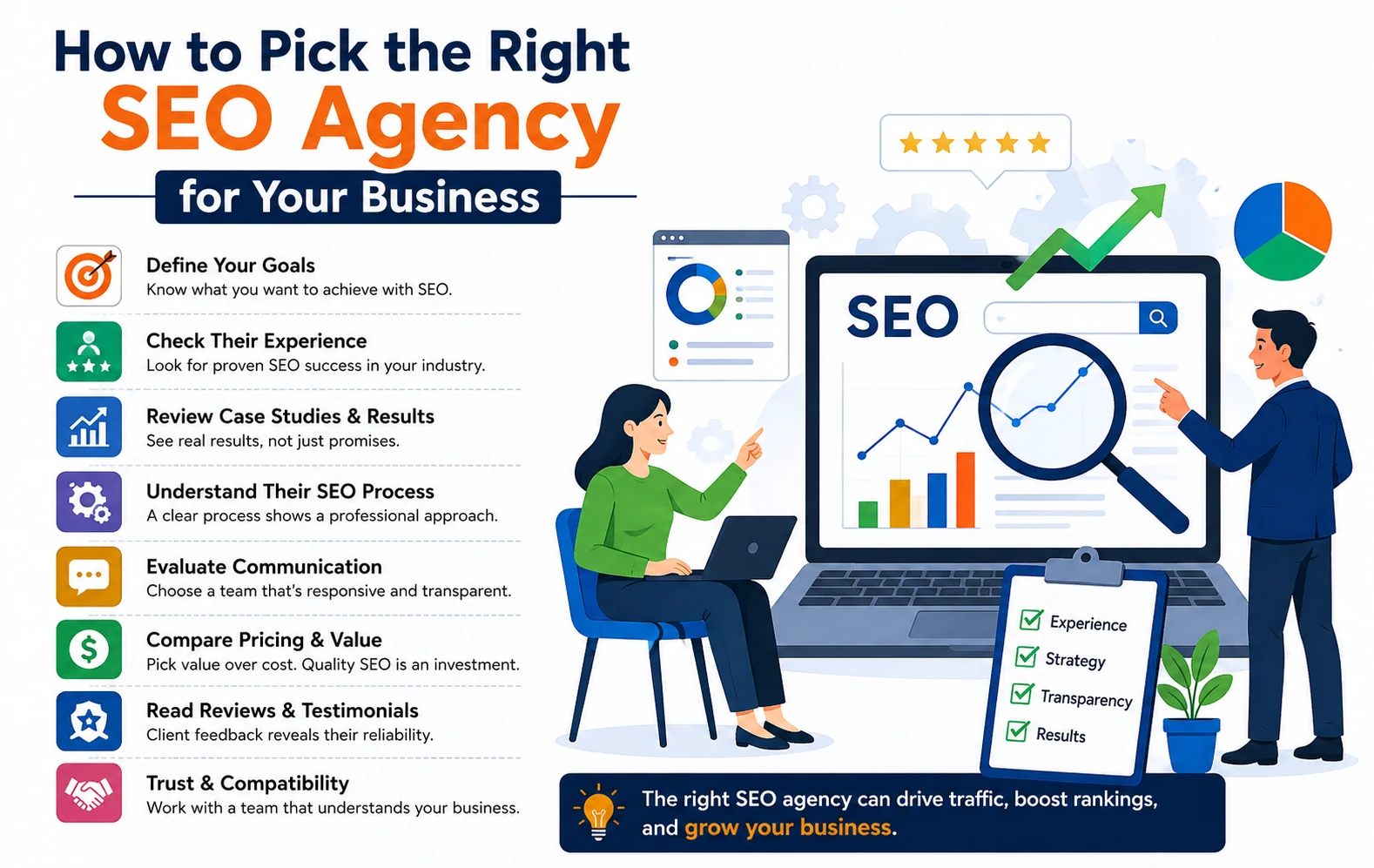
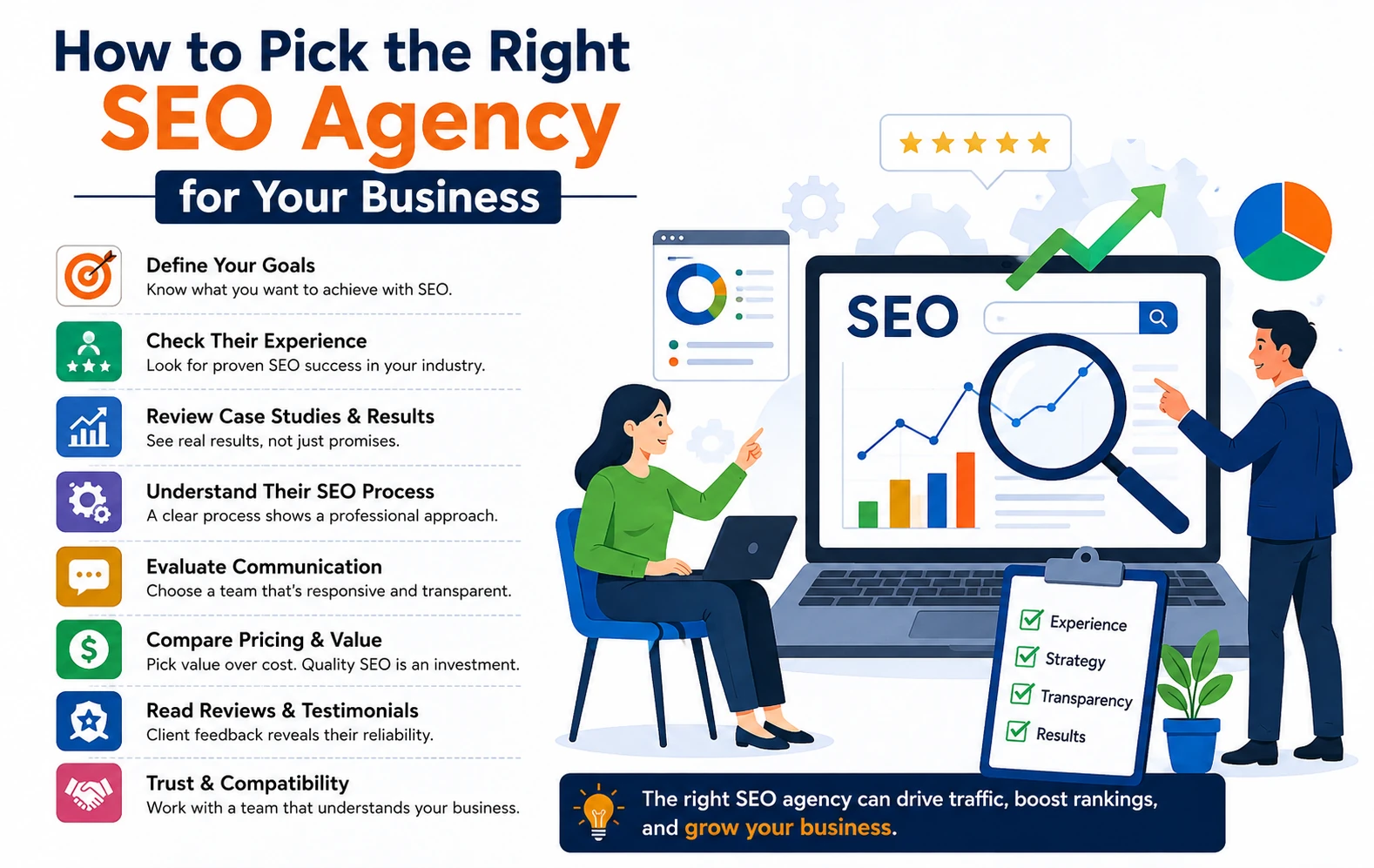
Before you contact a single agency, clarify what success looks like for your organization. Are you chasing brand awareness, lead generation, e-commerce revenue, or local foot traffic? Vague objectives lead to vague strategies. Write down specific, measurable goals, whether that is a percentage increase in organic sessions, a target number of qualified leads, or improved rankings for a defined set of keywords. This clarity will shape every subsequent conversation with prospective agencies.
Start with referrals from trusted peers in your industry, since firsthand accounts carry more weight than polished marketing copy. Beyond referrals, industry directories, LinkedIn groups, and even a simple search for agencies ranking well themselves can surface strong candidates. Attend webinars or local business events where agencies present case studies; this gives you a preview of their expertise and communication style before any formal pitch.
Once you have a shortlist, dig into their history of delivering results.
Ask for detailed case studies that show measurable outcomes: traffic growth, ranking improvements, conversion increases. Be wary of vague claims without data. A trustworthy agency should be able to walk you through the strategy, the obstacles encountered, and the eventual results with specificity.
Search for independent reviews on platforms like Google, Clutch, or industry-specific forums. Testimonials on the agency's own website are useful but inherently curated; third-party reviews offer a more unvarnished perspective.
While certifications are not the final word on competence, recognized credentials from Google, HubSpot, or SEMrush indicate a baseline commitment to ongoing education in a field that shifts constantly.
Prepare a list of pointed questions: How do you measure success? What tools do you use for tracking and reporting? Can you walk me through your process for keyword research? How do you stay current with algorithm updates? What happens if rankings do not improve within the agreed timeline? Their answers will reveal both technical competence and communication clarity.
Certain warning signs should give any prospective client pause. Guaranteed number-one rankings are a fabrication, since no agency can control a search engine's algorithm with that level of precision. Similarly, be skeptical of agencies that are cagey about their methodology or refuse to explain their tactics. Excessively cheap pricing often correlates with cut corners, outsourced low-quality work, or risky black-hat techniques that could jeopardize your domain long-term.
Pricing structures vary considerably across the industry, and each model carries distinct implications.
Retainers are the most common arrangement, providing ongoing, iterative work across technical, content, and link-building fronts. This model suits businesses seeking sustained, long-term growth rather than a one-time fix.
Some engagements are scoped as discrete projects, such as a technical audit or a website migration. This works well for narrowly defined needs but is less suited to comprehensive, ongoing optimization.
A smaller subset of agencies offer performance-based pricing tied to specific outcomes like ranking positions or traffic milestones. While appealing in theory, this model can incentivize short-term tactics over sustainable strategy, so scrutinize the fine print carefully.
Insist on regular, comprehensible reporting that ties activity directly to business outcomes. Vanity metrics like impressions mean little without context. Look for agencies that report on organic traffic, keyword rankings, conversion rates, and revenue attribution wherever possible, presented in a format you can actually interpret without a data science degree.
Beyond technical skill, consider how an agency communicates. Do they respond promptly to inquiries? Do they explain complex concepts in accessible language, or do they hide behind jargon? A responsive, transparent agency will save you countless headaches over the life of the engagement.
Some agencies specialize in verticals like healthcare, legal, e-commerce, or SaaS, and this specialization can be a significant advantage since they already understand your regulatory constraints, buyer behavior, and competitive landscape. That said, a generalist agency with strong fundamentals can still deliver excellent results if they are willing to invest time in understanding your niche.
A local agency may offer more personalized service and a deeper understanding of regional market dynamics, useful for businesses reliant on foot traffic or geographically bound customers. A national or global agency, by contrast, often brings broader resources, more diverse case studies, and exposure to a wider array of industries. Neither option is inherently superior; the right choice depends on your specific business model and target audience.
Ask whether you will have a single point of contact managing your account or whether you will be routed through a rotating cast of representatives. Continuity matters enormously in SEO, where institutional knowledge about your brand, audience, and history compounds in value over months and years.
An agency that cannot rank its own website for competitive SEO-related keywords raises an obvious question: if they cannot demonstrate proficiency on their own turf, why trust them with yours? This is not always a dealbreaker, since agency websites sometimes take a backseat to client work, but it is worth investigating.
Read every contract with scrutiny. Understand the notice period required to terminate the relationship, whether there are penalties for early exit, and who retains ownership of the work produced, including content and any proprietary tools or dashboards. Flexibility matters, since business needs evolve and a rigid, long-term lock-in can become a liability.
SEO is inherently a long game. Meaningful results typically take between four and twelve months to materialize, depending on competition, domain history, and market saturation. Any agency promising overnight transformation is either naive or dishonest. Set realistic milestones together at the outset to avoid disappointment and misaligned expectations later.
Consider how the agency will collaborate with your existing marketing, design, and development teams. Will they need access to your content management system? Will your developers need to implement technical recommendations? Establishing clear workflows and communication channels early prevents friction down the road.
Frequent missteps include choosing solely on price, failing to define goals before engagement, neglecting to check references, and abandoning a strategy prematurely before it has had time to show results. Another common error is treating SEO as a set-it-and-forget-it initiative rather than an ongoing, iterative process requiring ongoing collaboration.
After completing your due diligence, weigh all factors holistically: track record, communication, pricing transparency, industry fit, and cultural alignment with your team. Trust your instincts alongside the data. If an agency's proposal feels rushed, generic, or overly sales-driven, that impression often reflects the quality of ongoing service you can expect.
Selecting the right SEO agency is less a transaction and more the beginning of a sustained collaboration. The businesses that see the most dramatic, compounding gains are typically those that approach the relationship as a genuine partnership, rooted in shared goals, transparent communication, and patience. Take the time to vet thoroughly, ask uncomfortable questions, and resist the allure of shortcuts. The right agency will not just chase rankings; it will help build a durable foundation for organic growth that pays dividends for years to come.
Have a project in mind? Let’s build something amazing together.
Webbitech — A Leading Web Design & Web Development Company with 15+ Years of SEO & Digital Marketing Expertise, Delivering Countless Success Stories
From idea to execution, we help businesses create high-performing websites and applications.
Start your journey today and take your brand to the next level.
 Get Free Consulting
Get In Touch
Get Free Consulting
Get In Touch
