
Posted Date : 24 Aug 2026
Introduction: Why Choosing the Right App Development Company Matters
Define Your App Idea and Business Objectives
Identify the Type of Mobile App You Need
Determine Your Target Audience
Create a Clear List of App Features
Decide Between Android, iOS, and Cross-Platform Development
Set a Realistic App Development Budget
Research Potential App Development Companies
Review the Company's Portfolio
Check Relevant Industry Experience
Evaluate Technical Expertise
Assess UI/UX Design Capabilities
Examine Development Methodology
Understand the Company's Quality Assurance Process
Evaluate Communication and Project Management
Check Client Reviews and Testimonials
Ask About Security and Data Protection
Evaluate Backend and API Development Expertise
Understand Third-Party Integration Capabilities
Ask About App Maintenance and Post-Launch Support
Clarify Ownership of Source Code and Intellectual Property
Review the Development Timeline
Understand the Pricing and Payment Structure
Watch for Hidden App Development Costs
Ask About Scalability and Future Development
Evaluate the Company's Problem-Solving Approach
Compare Proposals Before Making a Decision
Common Mistakes to Avoid
Questions to Ask an App Development Company
Final Checklist for Choosing an App Development Company
Choosing an app development company is a consequential business decision. The right development partner can transform an idea into a dependable digital product, while the wrong one can produce delays, escalating costs, technical debt, and a frustrating user experience.
There are thousands of developers and software companies offering mobile application development. Their capabilities, processes, pricing structures, and technical maturity can differ dramatically.
A polished portfolio alone is not enough.
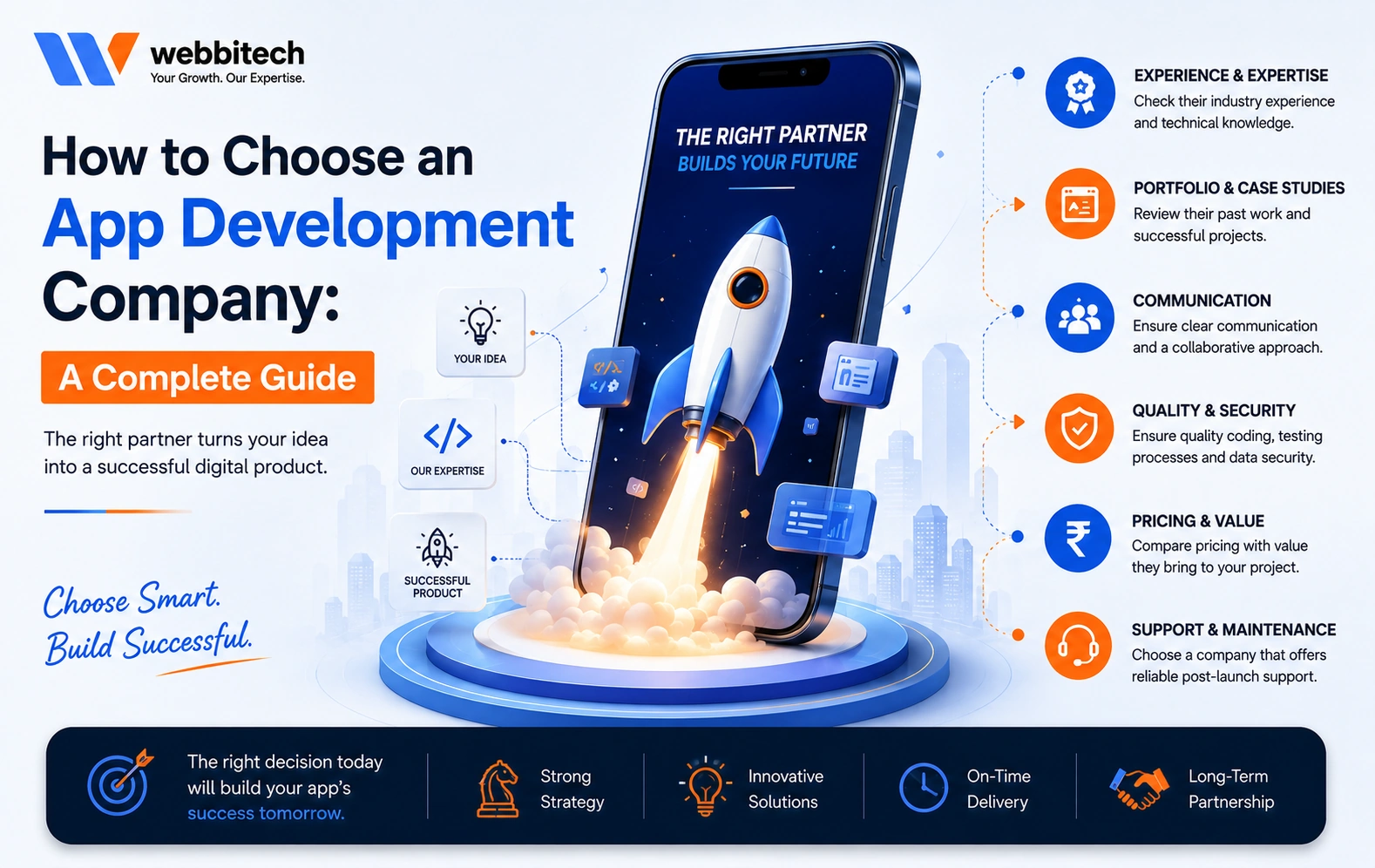
The best choice usually comes from evaluating the company's technical competence, relevant experience, communication, development methodology, security practices, pricing transparency, and long-term support.
An application is not merely a collection of screens.
Behind the interface sits an intricate ecosystem of databases, APIs, authentication mechanisms, business logic, cloud infrastructure, analytics, integrations, and security controls.
A competent app development company understands this entire continuum.
The right partner can help refine the product concept, identify technical risks, prioritize features, establish an appropriate architecture, and prepare the application for future growth.
A poor partner may focus primarily on delivering the initial interface while neglecting scalability, maintainability, security, or performance.
That distinction becomes expensive later.
Before contacting development companies, clarify what the application is expected to accomplish.
Ask fundamental questions:
What problem does the application solve?
Who will use it?
What business outcome should it generate?
How will users interact with it?
How will the business make money?
What differentiates it from competing applications?
What functionality is essential for the first release?
A concise product brief can be extremely useful.
It does not need to be a highly technical document. Instead, it should explain the business concept, target audience, essential features, expected platforms, and desired outcome.
The clearer the requirements, the easier it becomes to compare development proposals.
Different application categories require different technical capabilities.
You may be developing:
E-commerce apps
Education apps
Healthcare apps
Finance applications
Food delivery platforms
Taxi booking apps
Social networking platforms
Marketplace applications
Business management systems
On-demand service applications
AI-powered applications
A company experienced in building brochure-style business applications may not necessarily be the right choice for a real-time marketplace.
Specialization matters.
The intended users should influence application design and technology decisions.
Consider:
Age groups
Geographic locations
Device preferences
Internet connectivity
Digital literacy
Accessibility requirements
Expected usage frequency
For example, an application intended for users in areas with inconsistent connectivity may require stronger offline capabilities and efficient data synchronization.
Understanding the audience also helps the development team make better UX decisions.
Before requesting quotations, create an initial feature inventory.
Separate features into three categories:
These are necessary for the application to function as intended.
These improve usability but may not be required for the first release.
These can be introduced after the product has gained traction.
This prioritization prevents scope inflation.
It also makes proposals easier to compare because each company is estimating approximately the same functional scope.
One of the earliest technical decisions concerns the platforms you want to support.
Native Android and iOS applications are built specifically for their respective operating systems.
This approach can provide deep platform integration and excellent performance.
Frameworks such as Flutter and React Native allow developers to create applications for multiple platforms using shared code.
This can reduce duplicated development effort.
However, the appropriate approach depends on application requirements. A knowledgeable development company should explain the trade-offs rather than automatically recommending one technology.
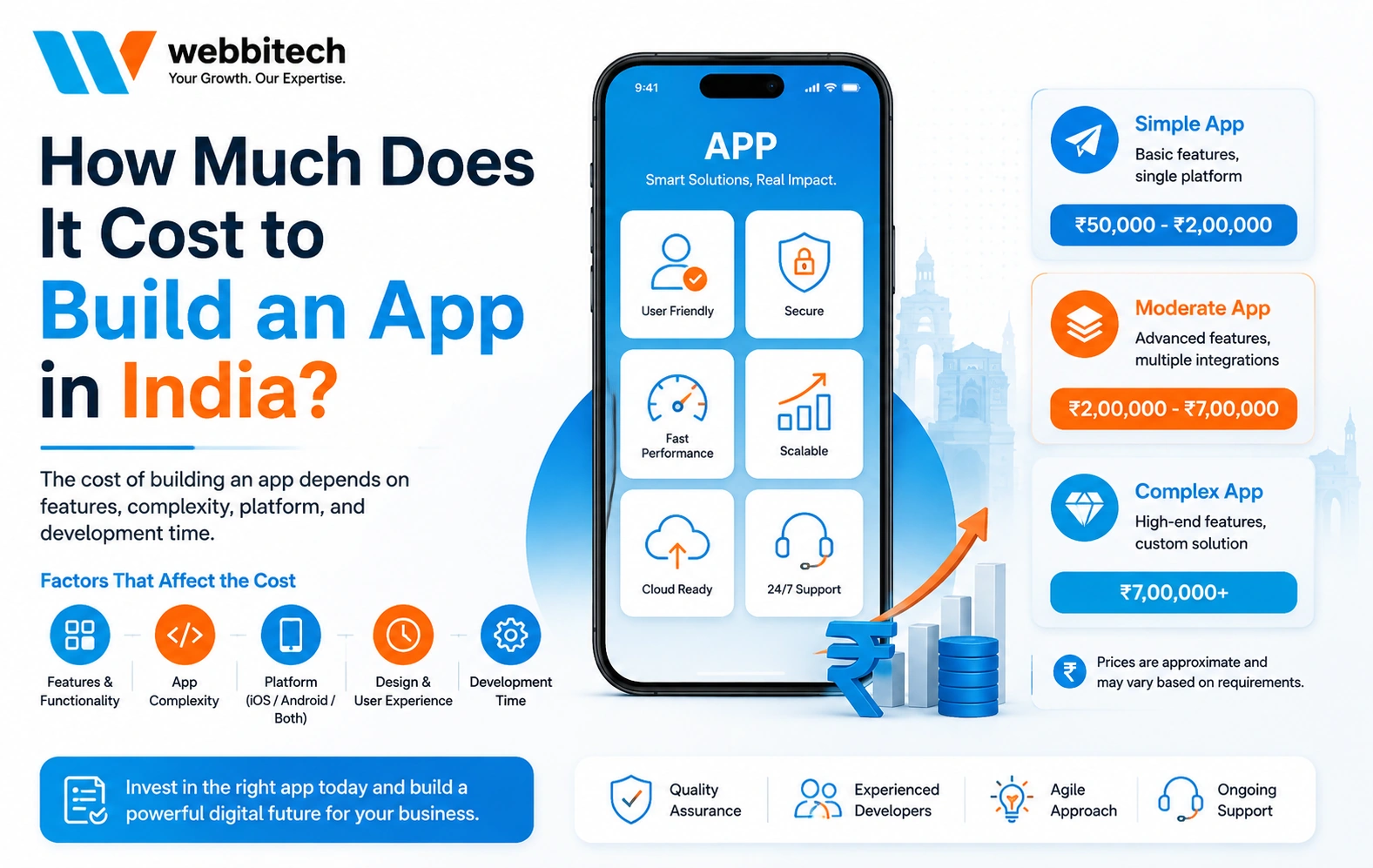
Budget is an important selection criterion, but the cheapest quotation is rarely the best benchmark.
Development pricing can vary based on:
Feature complexity
Number of platforms
UI/UX requirements
Backend architecture
Integrations
Security requirements
Testing
Team composition
Development timeline
Post-launch support
A suspiciously low quotation may indicate an incomplete scope, limited testing, inexperienced developers, or future change requests that were not included in the initial estimate.
The objective should be value for investment, not simply minimum expenditure.
Once requirements are reasonably clear, begin researching potential development partners.
Look at:
Official websites
Portfolio pages
Case studies
Client testimonials
Industry experience
Technical capabilities
Team profiles
Reviews
Published work
Communication channels
Create a shortlist rather than contacting dozens of companies indiscriminately.
Three to five strong candidates are often enough for meaningful comparison.
A portfolio provides evidence of previous work.
But look beyond visual polish.
Examine whether the company has built applications involving:
Similar functionality
Comparable user volumes
Relevant integrations
Similar industries
Comparable technical complexity
Multiple platforms
Ask whether the showcased projects were actually developed by the current team.
This is especially important when evaluating companies that display impressive work without explaining their contribution.
Industry experience can shorten the learning curve.
A company that has developed several healthcare applications, for instance, may already understand common workflows, privacy considerations, appointment systems, patient interactions, and healthcare-related integrations.
Industry familiarity does not mean identical experience is mandatory.
Technical competence remains crucial.
However, relevant domain knowledge can reduce discovery time and prevent avoidable misunderstandings.
Ask what technologies the company specializes in.
Potential areas include:
Android development
iOS development
Flutter
React Native
Backend development
Cloud infrastructure
APIs
Databases
DevOps
AI and machine learning
Cybersecurity
Do not select a technology solely because it is fashionable.
The development partner should explain why a particular architecture or framework is suitable for the application's requirements.
Users interact with the interface before they encounter the underlying architecture.
Good UI/UX design should make the application intuitive, efficient, accessible, and visually coherent.
Ask to see:
Wireframes
User flows
Prototypes
Design systems
Previous mobile interfaces
Find out whether designers work collaboratively with developers.
A beautiful design that cannot be implemented efficiently is of limited practical value.
Ask how the company manages development.
Common approaches include Agile and iterative development.
A structured methodology should establish:
Project milestones
Sprint cycles
Deliverables
Testing procedures
Feedback mechanisms
Progress reporting
Change management
The methodology should create visibility.
You should know what is being developed, what has been completed, what remains, and whether the project is moving according to plan.
Testing should not be treated as a final checkbox.
Ask how the company handles:
Functional testing
Device compatibility
Operating-system compatibility
Performance testing
Security testing
Regression testing
API testing
Usability testing
Find out whether developers perform their own testing only or whether dedicated QA professionals are involved.
For larger applications, independent QA oversight can provide an additional layer of scrutiny.
Even a technically excellent team can become difficult to work with if communication is poor.
Ask:
Who is the project manager?
How frequently will updates be provided?
Which communication channels will be used?
Who approves deliverables?
How are changes documented?
How quickly are issues escalated?
Clear communication prevents ambiguity from metastasizing into scope disputes.
Reviews can provide valuable evidence of the company's working style.
Look for recurring comments about:
Communication
Reliability
Technical quality
Meeting deadlines
Responsiveness
Post-launch support
Transparency
Do not focus solely on star ratings.
Read the substance of the feedback.
A detailed review describing how a company solved a difficult problem can be more informative than dozens of generic five-star comments.
Security becomes especially important when the application handles personal, financial, business, or sensitive information.
Ask about:
Secure authentication
Encryption
API security
Access controls
Secure data storage
Session management
Vulnerability testing
Backup procedures
Security monitoring
The company should be able to explain its security approach in understandable terms.
Vague assurances such as "the app will be completely secure" are less useful than a documented security methodology.
The mobile interface is only one component.
The backend may manage authentication, databases, transactions, business logic, notifications, analytics, and integrations.
Ask whether the company has in-house backend expertise.
Also determine how APIs will be documented and maintained.
A well-designed API architecture can make future integrations significantly easier.
Most modern applications interact with external services.
Examples include:
Payment gateways
Maps
SMS services
Email platforms
CRM systems
ERP systems
Social authentication
Analytics
AI services
Ask whether the company has previous experience integrating similar systems.
More importantly, ask how failures are handled.
An integration should account for expired credentials, API downtime, rejected requests, rate limits, duplicate transactions, and unexpected responses.
An application requires attention after launch.
Ask what happens when:
A bug is discovered
Android or iOS releases a major update
An API changes
A server fails
Users request enhancements
Security vulnerabilities emerge
Determine whether maintenance is included in the initial contract or billed separately.
Clarify the response time for critical issues.
This point should never remain ambiguous.
The agreement should clearly state who owns the following:
Source code
UI/UX designs
Database structures
Documentation
APIs
Application assets
Custom software components
Businesses should also understand how source-code access is provided and whether there are any restrictions on future development.
Intellectual-property ownership should be documented contractually.
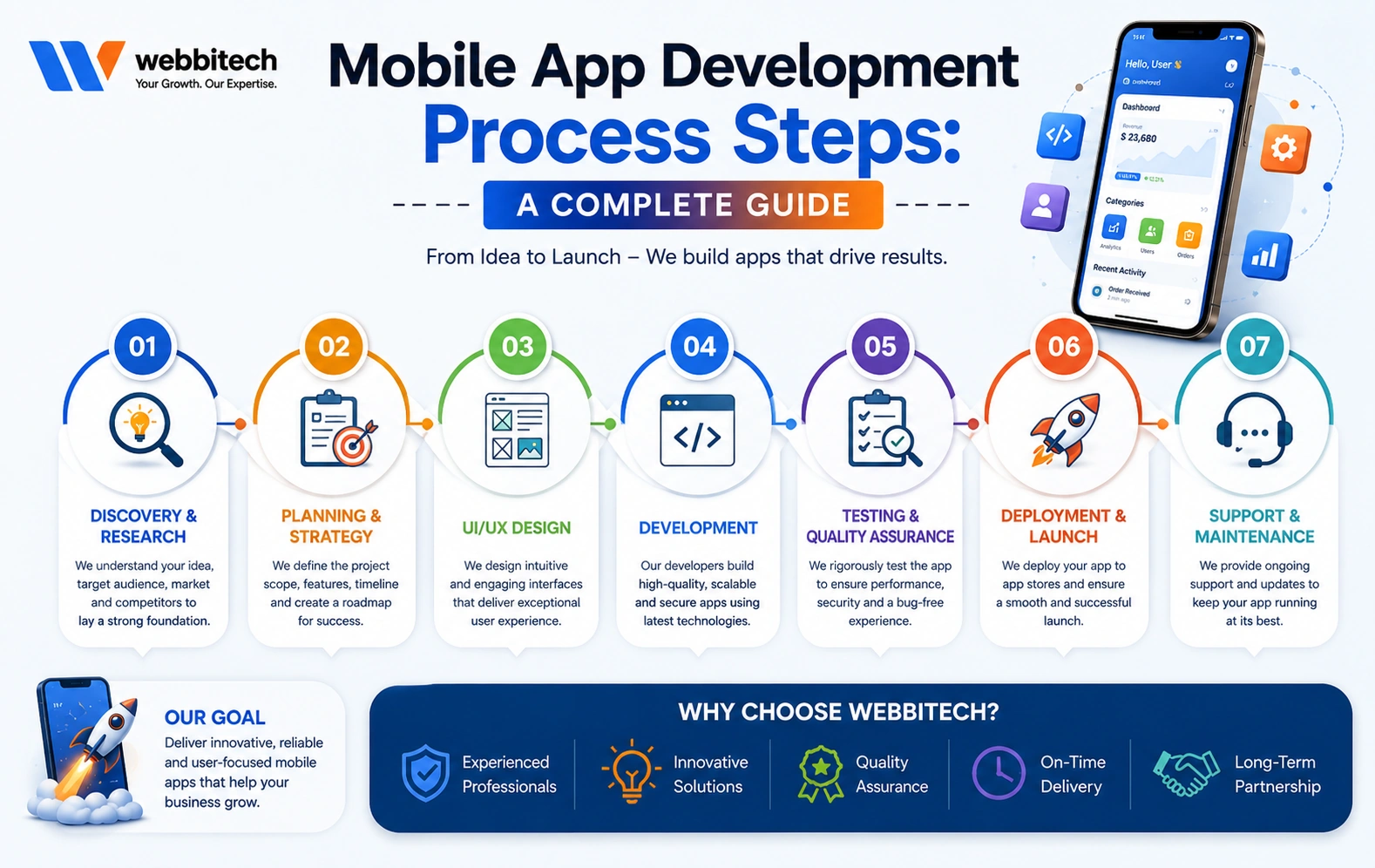
Ask for a realistic development schedule.
A professional timeline may include:
Discovery
Requirements
UI/UX design
Development
Backend integration
Testing
User acceptance testing
Deployment
Stabilization
Beware of promises that sound implausibly fast.
Quality software requires iteration.
A development proposal should explain what you are paying for.
Look for:
Total project cost
Development milestones
Payment schedule
Included features
Excluded features
Revision limits
Third-party expenses
Maintenance costs
Infrastructure charges
Avoid proposals that provide only a single price without explaining the underlying scope.
A transparent quotation is easier to evaluate and negotiate.
The development quotation may not include every operational expense.
Potential additional costs include the following:
Cloud hosting
SMS
Email services
Maps APIs
Payment processing
AI API consumption
Developer accounts
Security audits
Maintenance
App marketing
Analytics platforms
Ask explicitly:
"What costs will I need to pay apart from the development fee?"
That single question can expose substantial differences between proposals.
Your first release may serve hundreds of users.
Your long-term objective may involve hundreds of thousands.
Ask how the architecture can evolve.
Discuss:
Database scalability
Cloud infrastructure
Caching
API performance
Load management
Monitoring
Modular architecture
A scalable foundation does not mean overengineering everything from day one. It means avoiding architectural decisions that create unnecessary barriers later.
During the initial discussions, observe how the company responds to difficult questions.
A strong development partner will often ask questions that reveal hidden requirements.
For example:
What happens if a payment succeeds but the order fails?
Or:
What should happen when the user's internet connection disappears during a transaction?
These questions demonstrate engineering maturity.
A company that simply says "yes" to every request without investigating edge cases may create problems later.
Do not compare proposals solely by price.
Create a structured comparison involving:
| Evaluation Area | Company A | Company B | Company C |
|---|---|---|---|
| Relevant Experience | |||
| Portfolio | |||
| Technology | |||
| UI/UX | |||
| Testing | |||
| Security | |||
| Timeline | |||
| Pricing | |||
| Maintenance | |||
| Source-Code Ownership | |||
| Communication |
This turns an abstract decision into a more objective evaluation.
Several mistakes frequently undermine app development projects.
The lowest quote can become expensive if extensive rework follows.
An application requires ongoing technical stewardship.
Ambiguous requirements create scope creep.
A beautiful interface cannot compensate for unstable backend architecture.
Previous client experiences can reveal operational strengths and weaknesses.
Source code and intellectual property rights should be explicit.
Complex applications cannot responsibly be produced overnight.
Before signing a contract, consider asking:
How many applications have you developed?
Have you built an app similar to mine?
Who will work on my project?
What technology stack do you recommend?
Why is that technology appropriate?
How will the project be managed?
What is included in the quoted price?
What is excluded?
How will changes be handled?
How is testing performed?
What security practices are followed?
Who owns the source code?
Will I receive the complete source code?
What happens after launch?
What does maintenance cost?
How will the application scale?
What happens if the project is delayed?
How are third-party services billed?
Can you provide relevant client references?
What happens if the business requirements change?
The quality of the answers can reveal more than the sales presentation.
Before making the final decision, verify that the company:
Has relevant development experience
Demonstrates a credible portfolio
Understands your business objectives
Has suitable technical expertise
Provides professional UI/UX design
Follows a structured development process
Has a defined QA methodology
Understands security requirements
Provides transparent pricing
Clarifies ownership rights
Offers post-launch support
Provides realistic timelines
Communicates clearly
Documents project scope
Has credible client feedback
Can support future enhancements
If several of these elements remain unclear, additional due diligence is warranted.
The right partner should bring more than coding ability. It should bring product thinking, technical judgment, design competence, quality assurance, communication discipline, and an understanding of how software evolves after launch.
Price matters. But technical capability, transparency, relevant experience, security, scalability, and long-term support often matter more.
A thoughtful selection process can prevent costly rework and create a much stronger foundation for the application.
The ideal development partner is not necessarily the largest company or the cheapest company. It is the company that understands the business objective, translates it into a viable technical architecture, communicates clearly throughout development, and remains accountable after the application reaches users.

Have a project in mind? Let’s build something amazing together.
Webbitech — A Leading Web Design & Web Development Company with 15+ Years of SEO & Digital Marketing Expertise, Delivering Countless Success Stories
From idea to execution, we help businesses create high-performing websites and applications.
Start your journey today and take your brand to the next level.


 Get Free Consulting
Get In Touch
Get Free Consulting
Get In Touch
