Posted Date : 04 Dec 2025
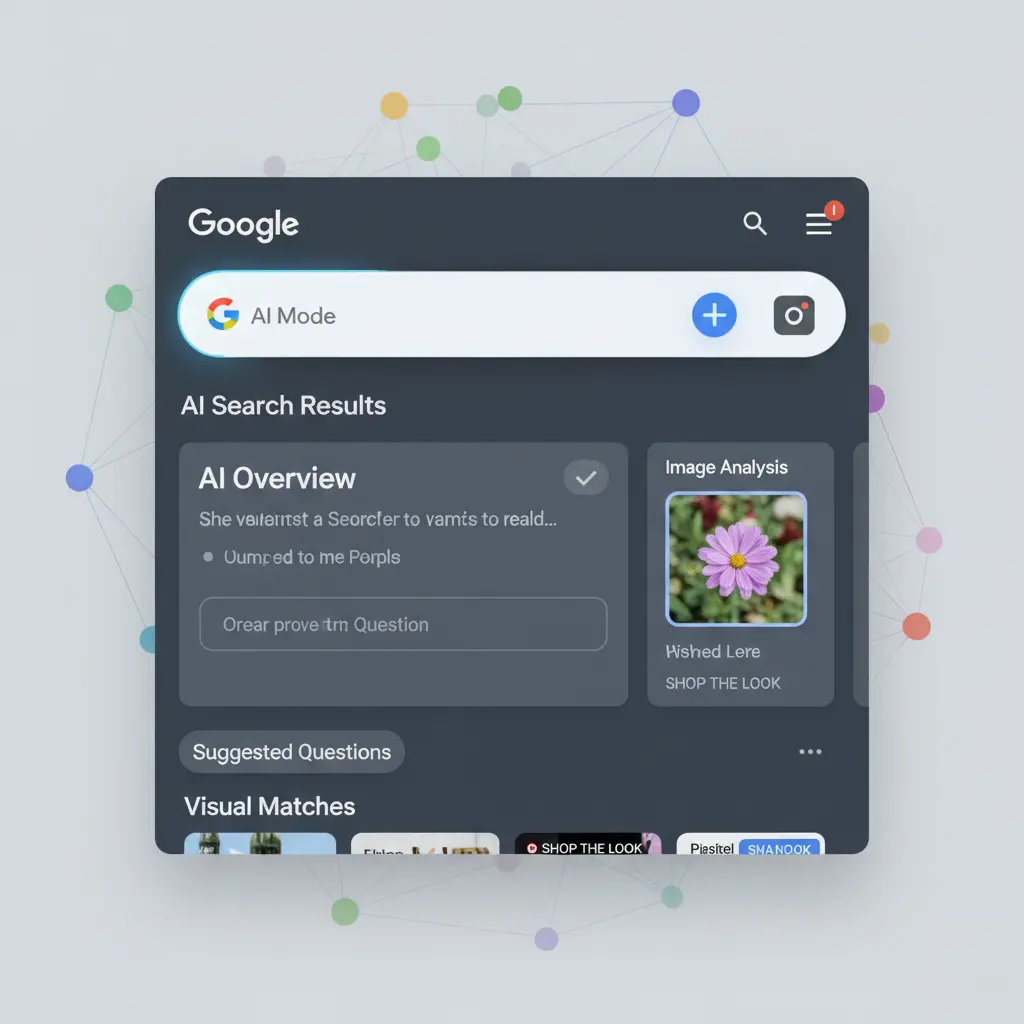
Google has quietly rolled out a new update on its home page, and it’s a strong signal of where search is heading next. The classic Google search bar now includes an upload button for files and images—but instead of taking users to traditional Google Search or Google Lens results, the journey leads directly into Google’s AI Mode.
This update might look small on the surface, but for marketers, website designers, developers, and SEO professionals, it marks a major shift in how users will interact with content online.
Previously, uploading an image meant you’d land on Google Lens or image-based search results.
Now, this new workflow bypasses all that.
The moment a user uploads a file or image from the Google homepage, the system launches AI Mode, where Google’s AI immediately analyses the content and generates AI-driven explanations, insights, and answers—without ever showing traditional search results.
This makes AI Mode feel less like an experimental feature and more like Google’s future default experience.
This isn’t an isolated update. Over the past year, Google has been reshaping the search experience in several visible ways:
AI Mode has been placed prominently to the left of the search tabs
AI Overviews now push users further into full AI Mode
Chrome’s omnibox is getting built-in AI Mode access
More visual, conversational, and action-oriented results are replacing links
Although Google once denied the idea of AI Mode becoming the default search experience, the latest UI choices strongly suggest that the company is moving in that direction.
The rise of AI-first search means one thing:
The traditional click-through model is changing.
In AI Mode, users receive summarised answers instantly. Fewer links are shown. Fewer clicks happen. This impacts:
Ranking on Google’s first page is no longer enough.
Brands must now ensure their content is:
AI-ready
Well-structured
Properly cited by Google’s AI engines
Optimized for rich data and schema
Website Design & Development
As user journeys become more AI-assisted, websites must shift toward:
Cleaner, faster, experience-driven interfaces
Stronger content hierarchy
More interactive UX components
AI-friendly structure (metadata, alt tags, accessibility, schema, etc.)
Websites that fail to meet modern technical standards may not get surfaced—especially when AI systems summarise content instead of displaying links.
Marketing funnels will need to adjust:
AI-generated answers mean fewer discovery clicks
Brand mentions inside AI Mode become critical for visibility
Content marketing must shift from just ranking to being cited
Trust-building through authoritative, helpful content becomes essential
Brands that don’t adapt risk losing organic visibility—not because they’re not ranking, but because AI Mode isn’t referencing them.
To stay ahead as Google moves toward an AI-driven search model, companies should:
Create deeply helpful, structured, original content that AIs can easily interpret and cite.
Invest in modern website design, responsive development, fast loading times, and UX clarity to stay algorithm-friendly.
Don’t rely solely on search traffic. Strengthen:
Social media marketing
LinkedIn content strategy
Email funnels
Video content
Paid advertising
Check how your content appears in AI Mode responses—not just search engine rankings.
Google’s latest upload-to-AI-Mode feature is more than a UI tweak. It’s another clear signal that search is shifting from “query → results” to “query → generated answer.”
For businesses, marketers, website designers, and developers, this is the moment to innovate.
Those who adapt to AI-driven search architecture early will gain visibility, while others fall behind.
Reach us for the best digital marketing company in Coimbatore. We help your business achieve top rankings on Google and Bing with proven digital strategies.
🚀 Get your business on top of Google & Bing! 📞 8124249066
Have a project in mind? Let’s build something amazing together.
Webbitech — A Leading Web Design & Web Development Company with 15+ Years of SEO & Digital Marketing Expertise, Delivering Countless Success Stories
From idea to execution, we help businesses create high-performing websites and applications.
Start your journey today and take your brand to the next level.